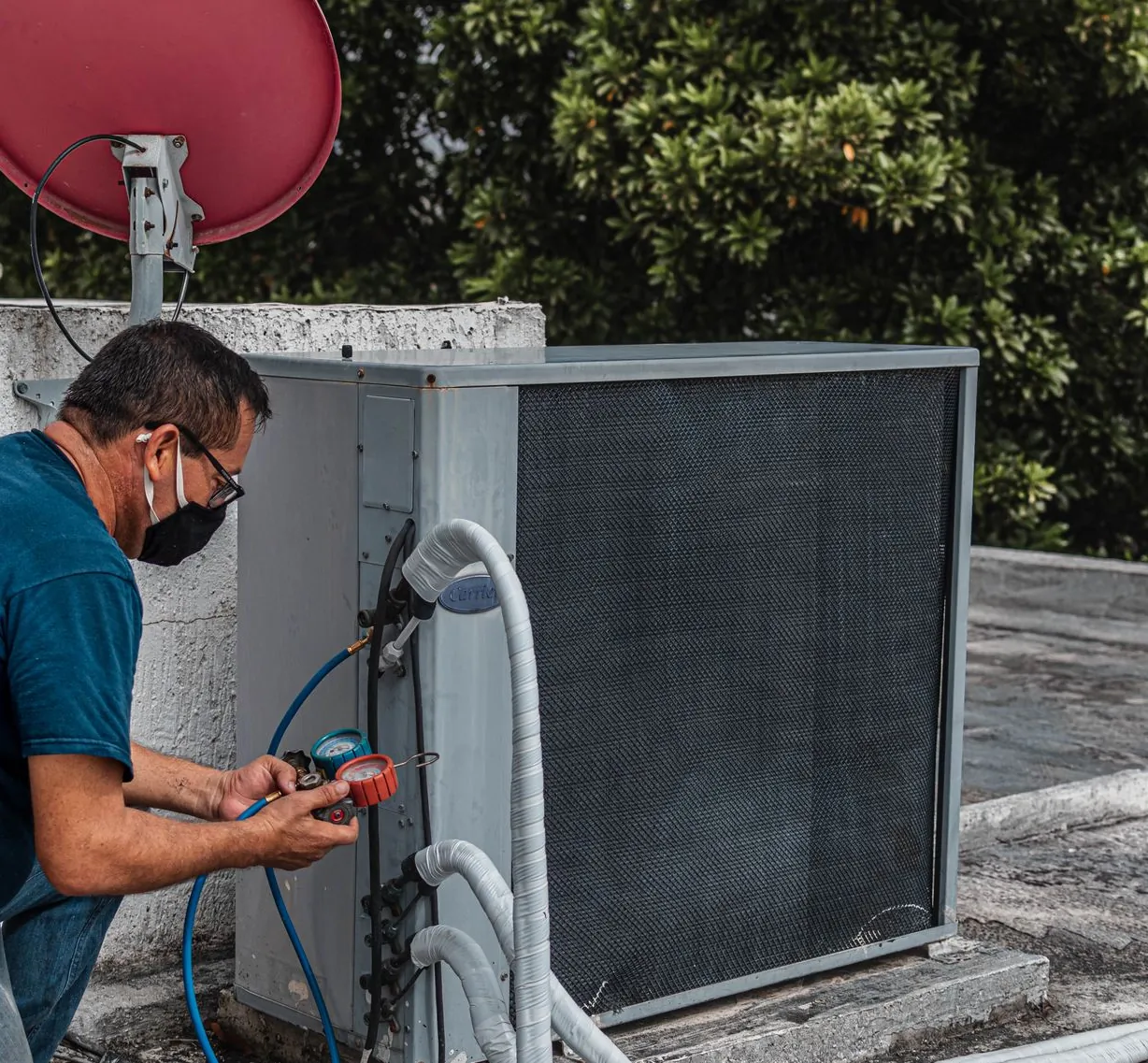
Mini-Splits · 14 min read · October 23, 2026
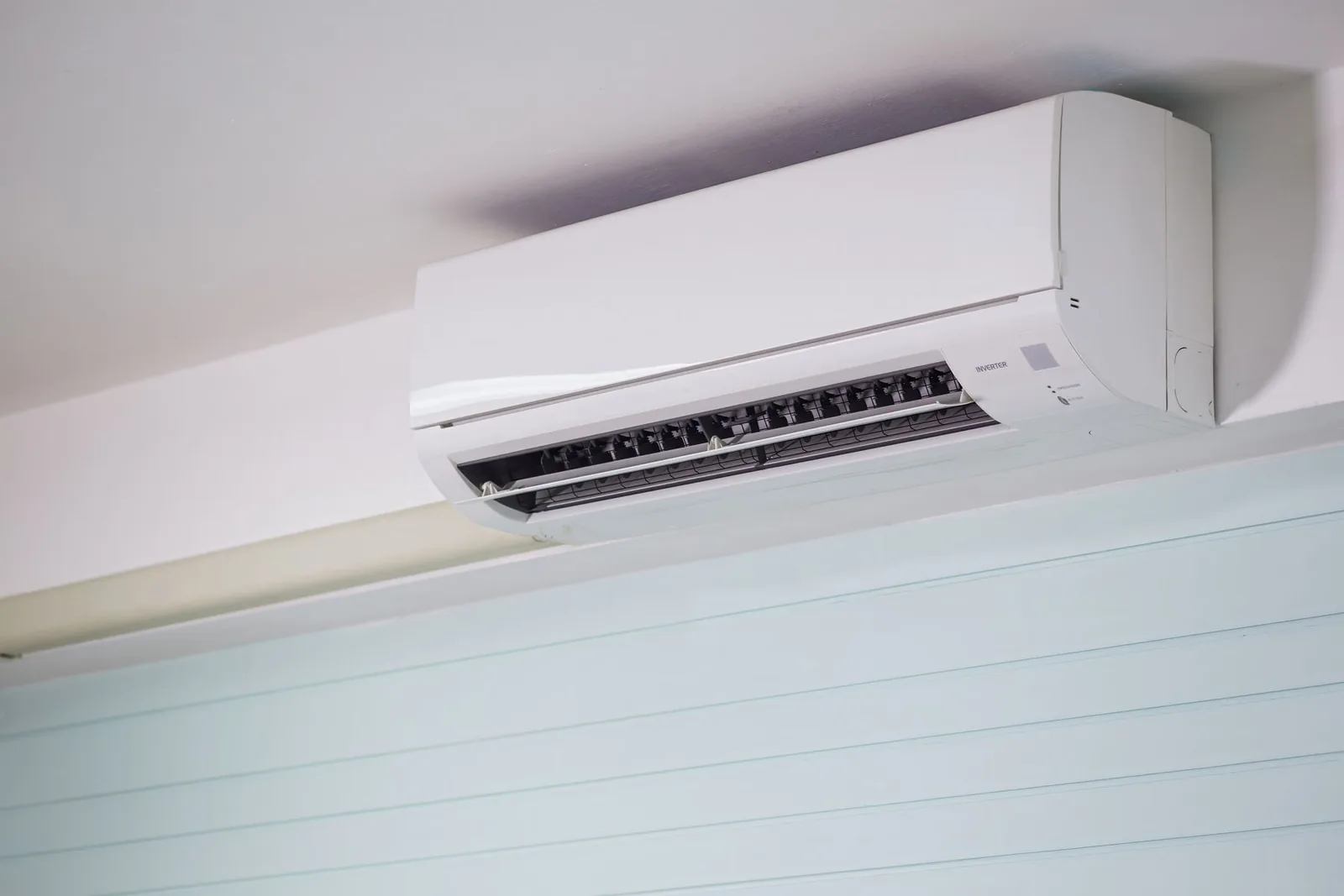
A two-car garage in the Valley needs more mini-split than its floor area suggests. ENERGY STAR's room chart calls for about 12,000 BTU for 450 to 550 square feet, but a Phoenix garage has a sun-baked steel door, often an uninsulated ceiling under the attic and a slab that stores heat, so insulate the door first and let a load calculation pick the size. Plan on a dedicated circuit and a disconnect at the outdoor unit, roughly $2,800 to $7,000 installed for a single-zone system by Phoenix cost guides, and no SRP rebate, because Cool Cash excludes garages (checked October 2026).
A garage is where a lot of West Valley homeowners first think about a mini-split: a home gym, a woodshop, a place to work on the truck, a second fridge that needs to survive July. It is also one of the hardest rooms on the property to cool, and the usual mistake is sizing it like a bedroom. Our ductless mini-split installation page covers the service, and our back-bedroom mini-split story shows a full install day.
Measure before you buy. No agency publishes how hot Phoenix garages get, so the best number is your own: hang a thermometer on the garage wall and read it at 4 p.m. on a 110F day, with the door closed.
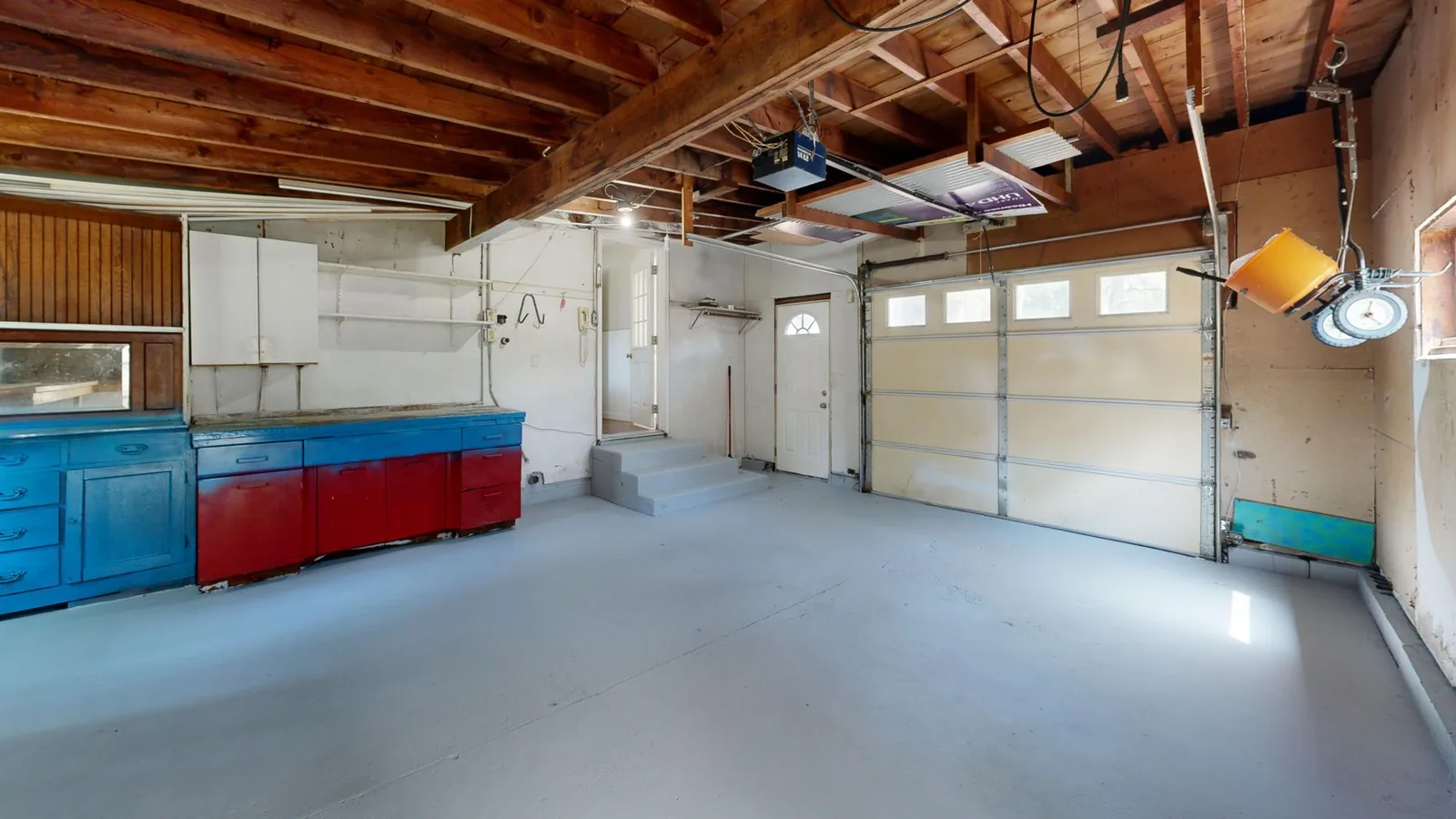
Hot enough that it has to be sized differently from any room in the house. Phoenix's 1991 to 2020 normal is 21 days a year at 110F or above, and 2024 had 70 (NWS Phoenix). A garage takes that heat from more directions than a bedroom does. The big steel door faces the street, and on a west-facing lot it takes the afternoon sun full on. In most tract homes the garage ceiling is drywall with the attic right above it, and because the garage was built as unconditioned space, that ceiling usually has little or no insulation (look from the attic hatch). In a 1998 study of new Phoenix homes, attics peaked 4F to 28F above the outdoor temperature. A Building America brief notes that the sun "can push roof surface temperatures over 160°F" in hot climates. Add a car that just came off the 101 with a hot engine, and the garage starts every summer evening with heat stored in the slab and walls.
More than the chart says, and a load calculation decides how much more. ENERGY STAR's room sizing chart, built for ordinary rooms with 8-foot ceilings, calls for about 10,000 BTU per hour for 400 to 450 square feet and 12,000 for 450 to 550, and it says to add 10% for a very sunny room (ENERGY STAR). That works out to about 22 to 27 BTU per square foot. A typical two-car garage falls in that size band, but almost nothing about it is ordinary. In the Valley, an uninsulated two-car garage of 400 to 480 square feet with a steel door and a bare ceiling typically lands at 18,000 to 24,000 BTU, roughly 40 to 55 BTU per square foot. Insulate the door and the ceiling and the same garage typically lands at 12,000 to 18,000. Mini-split retailers that sell garage units online point the same way and recommend 18,000 BTU for a two-car garage, 24,000 in desert climates.
The right size comes from a Manual J load calculation with the garage's actual numbers: door size and insulation, ceiling insulation, which way the door faces, wall construction, and how the space is used. A garage that is a gym for an hour each evening and one that is a workshop all Saturday afternoon need different answers. Single-zone mini-splits come in steps (12,000, 18,000 and 24,000 BTU are common sizes), so the calculation picks the step, and the insulation you add first can move you down one.
Fix the building before buying bigger. Many wall-mount lines stop at 24,000 BTU, a 30,000 to 36,000 BTU unit needs a larger circuit, and in a garage that has since been insulated, a big inverter spends spring evenings at its minimum speed and cycles on and off. A three-car garage, or a shop that runs all afternoon with the door going up and down, is where 30,000 to 36,000 BTU, or two heads on one condenser, makes sense. For a two-car garage, a calculation over 24,000 usually means the door, the ceiling or the west wall still needs work.
Yes, and do it first, because it changes the size you buy. Amarr, one of the large garage door makers, says: "An insulated garage door will help keep the temperature in the garage within a narrower temperature range as compared to the extreme range of outside temperatures" (Amarr). A Phoenix garage renovation guide calls R-10 "the sensible floor" for a new insulated door. Add weatherstripping on the sides and a new bottom seal, and insulate the garage ceiling from the attic side. Garage exterior walls in tract homes are usually uninsulated too, and after the door and the ceiling, a west wall is the next place insulation pays.
A door insulation kit or an insulated door is a one-time cost. An oversized mini-split bought to fight an uninsulated door costs more up front and more every month.
A dedicated circuit and a disconnect at the outdoor unit. The manufacturers spell it out. Mitsubishi's installation manual says to "use an exclusive circuit. Do not connect other electrical appliances to the circuit," and Pioneer's says power "must be supplied through an independent circuit and a dedicated breaker" and recommends a surge suppressor at the outdoor disconnect, which is worth having in monsoon season anyway.
The garage units in the 18,000 to 24,000 BTU range run on 208 to 230 volts, so the circuit takes two spaces in the panel. The wire size comes from the unit's minimum circuit ampacity and the breaker from its maximum fuse rating: Mitsubishi's GX installation manual lists 12 amps and 15 amps for the 12,000 BTU model at 208/230 volts, and Pioneer's 12,000 BTU sheet calls for a 15-amp double-pole breaker. If the panel is full, the choice is a subpanel or a panel upgrade, and that is often the biggest swing in the price. Under Arizona's contractor license classes, an HVAC contractor can add the mini-split's circuit to an existing panel or subpanel, while a new subpanel or a panel upgrade takes an electrical contractor (ROC license classifications, checked October 2026). The City of Phoenix lists "Adding or relocating air conditioners" and "Adding or relocating electrical circuits" among remodeling projects that may need a permit (How to Obtain a Residential Building Permit).
Plan on roughly $2,800 to $7,000 installed for a single-zone garage system by Phoenix cost guides, with the circuit, the door and the panel deciding where you land. The door insulation is the cheapest line on the page and the one that can drop the system a size.
| Line item | Typical range | What moves it |
|---|---|---|
| Single-zone mini-split for a garage | $2,800 to $5,500 installed (Phoenix garage guide) | BTU size, brand tier, wall bracket or pad, line-set length |
| Single-zone mini-split, broader Phoenix range | $3,000 to $7,000 installed (Phoenix guide) | 18,000 or 24,000 BTU instead of 12,000, premium brands, longer runs |
| Published Valley rate, single-zone | From $5,300 per system installed | Brand tier and efficiency |
| Dedicated 240V circuit | $800 to $2,000 per circuit (Phoenix guide) | Distance from the panel, open breaker spaces, outdoor disconnect |
| Panel upgrade, if the panel is full | $1,500 to $4,500 installed (national) | Amperage, utility coordination with APS or SRP, wall repair |
| Garage door insulation kit | $50 to $500 per door (national) | Foam board vs reflective kit, door size, DIY or installed |
| New insulated two-car steel door | $1,200 to $3,500 installed (Phoenix guide) | R-value, opener swap, style |
| Garage ceiling insulation | $260 to $3,000 installed (national) | Open attic vs drywall ceiling, depth |
| SRP Cool Cash or APS rebate | $0 per unit | Garages are excluded by SRP; APS lists no equipment rebates |
Researched Phoenix and national figures, checked October 2026. A written estimate at your house is free.
All four brands we install publish a cooling operating limit, the outdoor temperature up to which the unit keeps running in cooling: Mitsubishi's GX up to 115F, and Cooper & Hunter's Olivia, Pioneer's Diamante Pro and Daikin's larger Oterra units up to 122F, which matches Phoenix's all-time record, set June 26, 1990 (NWS Phoenix). At that temperature the unit still runs, but it delivers less than its nameplate BTU. The maker's extended capacity table shows how much, and a hot garage is sized to that number.
| Brand | Model checked | Cooling operating limit (spec sheet) | Warranty notes |
|---|---|---|---|
| Mitsubishi Electric | MSZ-GX12NL and MSZ-GX24NL | 115F (12,000 and 24,000 BTU) | 10 years parts and compressor if registered within 90 days |
| Daikin | Atmosphera RXM12; Oterra RXF12 and RXF24 | 115F (Atmosphera); 118.4F (Oterra 12k); 122F (Oterra 18k and 24k) | Internet purchases not covered unless installed by a dealer |
| Cooper & Hunter | Olivia CH-RES12-230VO | 122F (12,000 BTU; check the sheet for the size you buy) | 7 years compressor, 5 years parts; licensed install and registration within 60 days |
| Pioneer | Diamante Pro WYT012GLSI20RL | 122F (12,000 BTU; check the sheet for the size you buy) | 5 years if registered; 1 year basic |
Mitsubishi states its limit as the temperature of the air entering the condenser, and a condenser on a sunny slab against a west-facing stucco wall can breathe air hotter than the official reading, which is why shade and placement matter. Mitsubishi is the quiet premium pick for a garage that doubles as an office, while Cooper & Hunter and Pioneer carry the highest published limits at a lower price. Whatever the badge, register the unit: Mitsubishi drops from 10 years to 5 years on parts without it, and Cooper & Hunter's warranty requires registration within 60 days.
No. SRP's Cool Cash rebate pays on high-efficiency AC, heat pumps and inverter mini-splits, but its program page says plainly: "New Construction homes, window units, and installations in garages and other non-habitable spaces do not qualify for the rebate" (SRP Cool Cash). APS no longer lists any residential AC or heat pump equipment rebate on aps.com, and the old rebate page now returns a "page not found" (both checked October 22, 2026). Budget a garage unit with no utility money in it. The one case worth asking SRP about is a garage permanently converted into living space, and the program's terms decide that, not the contractor.
Put the indoor head high on a wall where it can throw air down the length of the garage, away from the big door so it is not fighting every opening, and not directly over a workbench where it will pull sawdust into its filters. Outside, the condenser goes on a pad or a wall bracket where a car door, the trash cans or the mower will not hit it, ideally on a north or east wall out of the afternoon sun.
In a narrow side yard, keep the clearances in the maker's manual and point the fan discharge along the side yard, not into the block wall, or the condenser re-breathes its own hot air. Bare black foam insulation on a line set cracks and falls away within a few Valley summers, so the run outside goes in a painted line-set cover or a UV-rated jacket, with the drain inside the same cover. The condensate line runs to gravel or a planter, not across the driveway, and in Phoenix it cannot be bare plastic in the sun: the city's mechanical code amendments say "Nonmetalic piping shall not be installed in exposed locations" (section 307.2.2, checked October 2026).
The HOA does get a say. Arizona law stops a homeowners association from banning solar panels (A.R.S. 33-1816), but we know of no matching protection for an AC condenser, so your CC&Rs and the architectural committee decide where it can sit and whether it needs screening. Get that approval in writing before install day.
The same way as the back-bedroom job, with one garage-specific step. The head and its bracket go up first (Mitsubishi says at least 5.9 feet off the floor), then a core hole sloped to the outside, with the line set and drain run together and the drain falling the whole way. The condenser goes on its pad or bracket with the maker's clearances, and the flares are torqued to the maker's table: on Mitsubishi's GX, 10 to 13 foot-pounds on the 1/4-inch line and 25 to 30 on the 3/8-inch. Then comes a nitrogen pressure test, a vacuum pulled to 500 microns and held (Mitsubishi's GX manual calls for a 30-minute rise test and a 500-micron hold of at least an hour), the valves opened, and refrigerant weighed in for any piping past the precharged length. The dedicated circuit and disconnect go in, and the test run checks cooling and heating, the temperature split, the drain and every flare.
The garage step: if the line set has to pass through the wall or ceiling between the garage and the house, that hole is sealed with fire-rated material so the fire separation stays intact. The residential code requires penetrations of that separation to be protected (IRC R302.5.3, checked October 2026).

It is not a good idea, and the residential code works against it. The wall between a garage and the house is a fire separation, and the code says ducts in the garage and ducts through that wall "shall be constructed of a minimum No. 26 gage (0.48 mm) sheet steel or other approved material and shall not have openings into the garage" (IRC R302.5.2, checked October 2026). The house system was also sized for the house, not for a garage with a sun-baked door. A separate mini-split keeps the garage's air, fumes and dust out of the house's ducts.
Yes. An inverter mini-split can sit at a higher set point when the garage is empty and pull it down when you come out, and a cooler starting point means less waiting. Starting it before you head out works better than starting it when you walk in on a July evening, because the slab and walls have been soaking up heat all day and take time to give it up.
It trades a lot of the cooled air for hot air, and the inverter ramps up to recover, which is normal. The slab, the walls and what is stored in the garage keep their cooling, but a door that opens every few minutes keeps the unit at full speed. If the garage is a gym or a shop, come and go through the side or house door when you can, and close the big door while you work. That habit is worth more than an extra size of equipment.
It clogs the indoor head's filters faster than a bedroom would, especially in a woodshop or in haboob season. Check and rinse the head's washable filters often in summer, as the owner's manual directs, keep the head away from the saw and the sander, and rinse the outdoor coil gently with a garden hose, power off, after a dust storm. A clogged filter cuts airflow, and low airflow is how a coil ices up.
No. El programa Cool Cash de SRP no paga instalaciones en cocheras ni en otros espacios no habitables, y su propio formulario en español dice cocheras. APS ya no anuncia reembolsos para equipos de aire acondicionado en aps.com (revisado en octubre de 2026). Si la cochera se convirtió en un cuarto habitable, pregunte a SRP antes de comprar. Para un presupuesto gratis llame o mande texto al 480-853-6627. Se habla español.
The core hole, the circuit and the condenser pad are the messy part of the job, so anything that shares them or the trip is quoted together on the same visit. A door insulation kit and a surge suppressor for the outdoor disconnect are things you can buy yourself. These are the ones we handle.
Text us the garage size, which way the door faces and a photo of the electrical panel, and we will tell you what size system it needs. Call or text 480-853-6627 for a free estimate in Glendale and the West Valley, or request a free estimate online.
Get a free, no-pressure estimate from a licensed local pro. Call or text and we'll get you scheduled fast.