Maintenance · 11 min read · October 24, 2026
A real pre-summer AC tune-up in Phoenix measures the refrigerant charge by subcooling or superheat, tests the run capacitor against its rating, cleans the condenser coil and clears the condensate drain, and published Valley prices run from a $99 advertised special to an average of $100 to $250 a visit. Book it in March or April: Phoenix's average first 100-degree day is May 2 on the NWS 1991 to 2020 normals, and in 2026 the first one came on March 18.
Spring is the window because the cooling side has sat idle since fall and a weak part found now gets replaced before it fails on a 110-degree afternoon. Our AC maintenance and tune-ups page covers booking one with us.
Ask for the readings. A tune-up that ends with "everything looks good" and no numbers is a filter change and a rinse. Ask for the subcooling or superheat, the capacitor's measured microfarads against its rating, the temperature split across the indoor coil and the static pressure.
March or April, before the first 100. NWS Phoenix puts the average first 100-degree day at May 2 and the average first 110 at June 11 on the 1991 to 2020 normals. The calendar is sliding earlier: Arizona's Family, citing NWS Phoenix, reported that Sky Harbor reached 100 at 2:57 p.m. on March 18, 2026, the earliest on record, ahead of March 26, 1988. The top end is longer too: the normal is 21 days a year at 110F or hotter, and 2024 had 70.
Spring suits the work itself. A tech can reach an attic air handler without heat risk and order a part that arrives before anyone needs the AC overnight. Snowbirds heading north in April get the check done before the house sits closed all summer with the thermostat set high.
A cleaning first, then a set of written measurements. The ENERGY STAR maintenance checklist covers the basics: check the thermostat settings, tighten electrical connections, lubricate moving parts, inspect the condensate drain, check the controls, clean the evaporator and condenser coils, check the refrigerant level, and clean and adjust the blower. For Valley heat, a complete visit runs in this order and writes the readings down, because a charge reading taken with a dirty filter or coil is wrong:
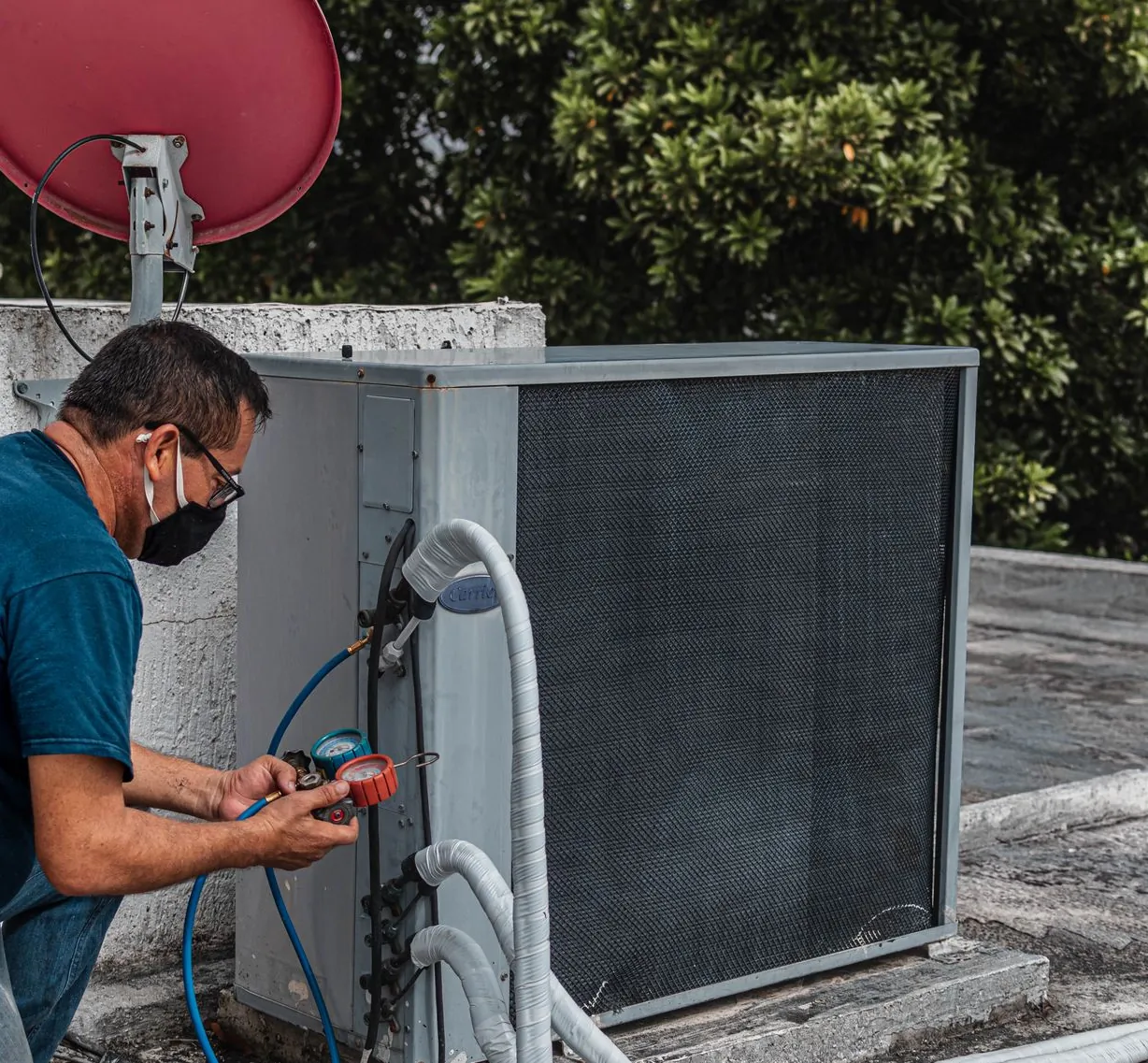
Because an AC that needs refrigerant has a leak, and adding more without measuring hides it. The system is sealed, and the charge does not wear out or get used up. "Does it need more Freon?" is the question most homeowners ask, and the answer is a reading. A tech runs the system 10 to 15 minutes with a clean filter and coil, then measures subcooling on a system with a thermostatic expansion valve against the target on the data plate or charging chart (often around 10F), or superheat on a fixed-orifice system against the maker's chart for that day's indoor wet bulb and outdoor temperature. Many makers also set a minimum outdoor temperature for checking charge, so on a cool March morning the tech may wait for the afternoon. If the charge is low, the next step is a leak search before another pound goes in.
Only an EPA Section 608 certified technician may do that work, and only certified technicians can buy the refrigerant. SRP holds new installs in its Cool Cash program to a charge within plus or minus 5 percent of specification and airflow within plus or minus 10 percent, a useful yardstick for a tune-up on an existing system too (both rules checked October 2026).
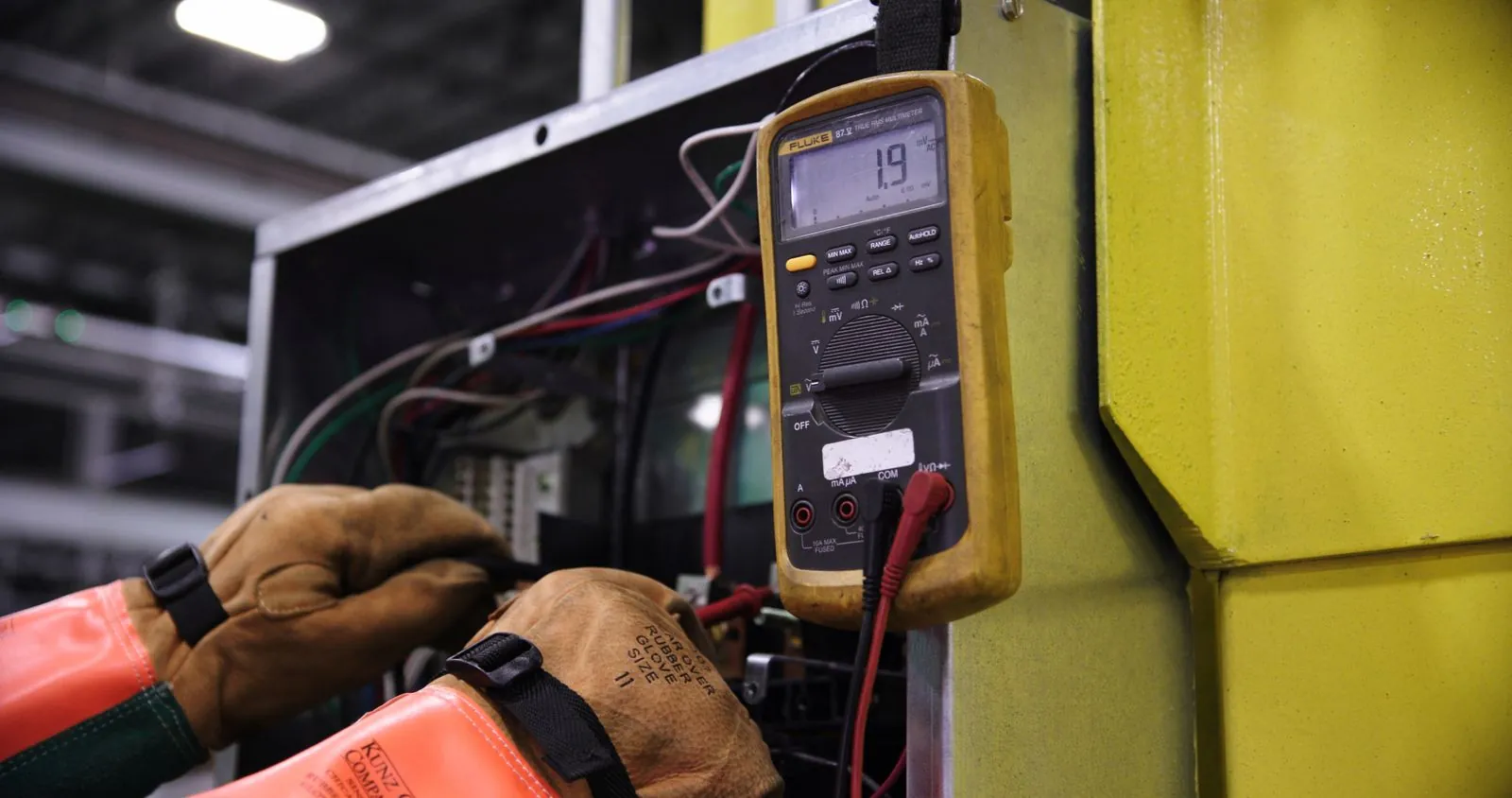
One of the most common summer failures, weeks early. The run capacitor helps the compressor and the condenser fan motor start and run efficiently, and heat wears it down. It is tested with the power off and the capacitor discharged. As an example, a capacitor stamped 45/5 microfarads with a plus or minus 6 percent tolerance should read between about 42.3 and 47.7 on the compressor side. One that reads below its low limit in March is the part that stops the outdoor unit on a 112-degree afternoon, and a swollen top or oil on the can means it is done whatever the meter says.
In spring, that is a short part swap on a scheduled visit. The same failure at 6 p.m. in July starts with an after-hours diagnostic, which one published Valley rate puts at $148 a visit before the part.
The outdoor coil, yes, and the indoor coil when the readings call for it. The condenser coil is the radiator that dumps the house's heat outside, and a season of monsoon dust and haboob grit packs it from the outside in. A proper cleaning lifts the fan assembly and rinses the coil from the inside out, so the dirt leaves the way it came, with water or a cleaner made for that coil. No acid cleaner goes on aluminum or microchannel coils. In April, palo verde blossoms and cottonwood fluff often land on top of last monsoon's dust. The indoor evaporator coil sits sealed in the air handler cabinet. A tech checks it through an access panel where one exists and cleans it when the temperature split and airflow say it is restricted.
Rooftop package units get the same work on the roof. The tech works on a foam or low-slope coated roof, checks the curb seal and follows the condensate line that drains onto the roof. That outlet needs a P-trap, because the blower pulls the drain pan under negative pressure. A dried-out or missing trap puts water in the unit or the ducts, and condensate dumping on a foam roof erodes the coating. The rooftop package unit post shows that cabinet and its curb, and the gallery has rooftop units on coated flat roofs from real installs.

An add-on is worth it when a reading backs it: a capacitor that measures outside its printed tolerance, a contactor with burned points, a hard-start kit on a compressor that struggles to start, a coil cleaning when the temperature split and static pressure say the coil is restricted. A refrigerant top-off with no leak search, a part replaced while its reading is in spec, or a duct cleaning, UV light or air purifier sold on the visit with nothing measured behind it is a sales item. Ask to see the number that justified it. A compressor drawing close to its RLA on a mild spring day is a warning worth hearing about. A part that tests fine can stay.
Published Valley prices run from a $99 advertised special to an average of $100 to $250 a visit, and maintenance plans run about $154 to $330 a year for one system. The table lists what Valley companies published on their own sites in October 2026.
| Service | Published price | Publisher |
|---|---|---|
| Tune-up, stated average | $100 to $250 per visit | Day & Night Air |
| Tune-up, advertised | $129 per visit | Goettl ("AC Rejuuuvenation") |
| Tune-up special | $99 per visit | Scottsdale Air |
| Diagnostic, when a part has already failed | $89 per visit, waived with an approved repair | Champion Air |
| Diagnostic, standard and after hours | $98 per visit, or $148 per visit after hours | Howard Air |
| Maintenance plan, one system | $153.89 per year | Parker & Sons |
| Maintenance plan | $19 per month ($228 per year) | Day & Night Air |
| Maintenance plan | $23 per month | Champion Air |
| Maintenance plans | $15.50 per month (two tune-ups a year), or $330 per year (Comfort Club) | American Home Water & Air |
Prices as each company published them on its own site, checked October 24, 2026, for comparison. Plans differ in visits and perks, so read each plan's terms. A written estimate from us is free.
The price alone does not say what was done. Two $129 visits can differ by a capacitor reading, a charge measurement and a flushed drain line, so ask what the visit includes in writing and ask for the numbers at the end.
It depends on what the plan covers and whether you would buy the visits anyway. The published plans above work the same basic way: a yearly or monthly fee, one or two scheduled visits, and member perks the companies list, such as waived diagnostic fees or priority scheduling. Two single tune-ups at $100 to $250 each cost $200 to $500 a year, against about $154 to $330 for the plans published in the Valley (checked October 2026), so a plan that includes two visits usually costs less than buying them one at a time. A plan with one visit, or perks you will not use, may not.
For a heat pump or a house with a gas furnace, the fall visit matters as much as the spring one. Some manufacturers also tie warranty terms to maintenance: Daikin and Amana require annual maintenance for their unit-replacement warranties. Keep the dated invoice from every visit with the warranty paperwork, whoever does the work.
The easy things, none of which involve refrigerant or opening an electrical panel. Replace the filter if it is gray. Clear about two feet around the outdoor unit: weeds, stored boxes, the pool equipment cover that drifted against it over the winter. With the power off at the outdoor disconnect, rinse the condenser fins gently with a garden hose, never a pressure washer. If your air handler's drain line has a cleanout cap, pour in a cup of water and watch it drain outside. Then set the thermostat to cool, drop it a few degrees, and confirm the outdoor fan and compressor both start. Water dripping from a pipe stub over a window or the eave means the primary drain is clogged, and that one needs a call right away.
If something does not start, write down what you saw and when, because it saves the tech time on the visit. Rooftop units stay off the homeowner's list because of the roof access.
Once a year before summer at minimum, and twice a year for a heat pump or a system with a gas furnace, with the second visit in the fall before heating season. ENERGY STAR recommends checking the cooling system in spring and the heating system in fall. A Valley system runs far more cooling hours than one in a mild climate, so a skipped year tends to show up as a packed coil or a weak capacitor.
For some brands it is part of the deal. Daikin requires annual maintenance for its 12-year unit replacement warranty, and Amana requires it for its 10-year unit replacement warranty. Trane's certificate says products must be properly installed, operated and maintained by a licensed HVAC service provider, and Lennox's says properly installed and maintained by a licensed HVAC installer or contractor. A dated invoice from each visit is the easiest proof that a failure was not caused by neglect. Keep them with the registration confirmation.
Yes, gently. Shut the power off at the outdoor disconnect first, then rinse the fins with a garden hose from the top down, and keep the water out of the control box. Skip the pressure washer, which bends the fins and blocks the airflow you are trying to restore. Leave the fan assembly in place. Lifting it is part of a tech's coil cleaning. A rooftop package unit is a job for a tech because of the roof access and the condensate line.
It can, when it finds something. A dirty condenser coil, a low charge or a clogged filter makes the compressor run longer to move the same heat, and in a Valley summer those extra hours land in the priciest part of the day: 4 to 7 p.m. on APS time-of-use plans and 6 to 9 p.m. on SRP's Conserve plan (checked October 2026). On a clean, correctly charged system the bill barely moves. The value there is catching the capacitor or contactor before it fails.
Por lo menos una vez al año, en marzo o abril, antes del primer día de 100 grados, que en Phoenix llega en promedio el 2 de mayo. Si su casa tiene bomba de calor o calefacción de gas, conviene una segunda visita en el otoño. Un buen mantenimiento mide la carga de refrigerante, prueba el capacitor, limpia el serpentín del condensador y destapa la línea de drenaje. Llame o mande un texto al 480-853-6627 para un presupuesto gratis.
The tech is already at the unit with the panels open, so these are quoted together on the same visit.
Call or text 480-853-6627 to get on the spring schedule before the first 100, or request a free estimate online if you would rather write.
Get a free, no-pressure estimate from a licensed local pro. Call or text and we'll get you scheduled fast.